

Foams & Sponges
Silicone rubbers are materials whose chemical backbone consists of highly stable silicon–oxygen (Si–O) bonds. Silicone rubbers are chemically related to quartz and glass and many of their excellent properties are similar to those of the latter materials. The molecular structure of silicone avoids the rigidity of the organic groups on every atom and during vulcanisation they are cross linked to form a three dimensional, flexible, rubber like substance. Inorganic fillers are embedded in the latticework structure and have a decisive effect on the general properties due to the reciprocal action between the filler and high siloxanes. As with other kinds of rubber, the physical and chemical properties of silicone may be varied by the appropriate selection of filler and catalyst.
Engineering Options
Wire Reinforcement
A wire helix between the plies helps to prevent collapse in negative pressure conditions.
Part Marking
Part marking with Silflex or customer logos and part numbers assists with product identification and traceability.
Anti Abrasion Sleeves
Anti Abrasion Sleeves to protect against localised abrasion.
Location Marking
Marks can be added to the hose to specify where components are to be placed such as clips helping speed up installation.
Product Characteristics
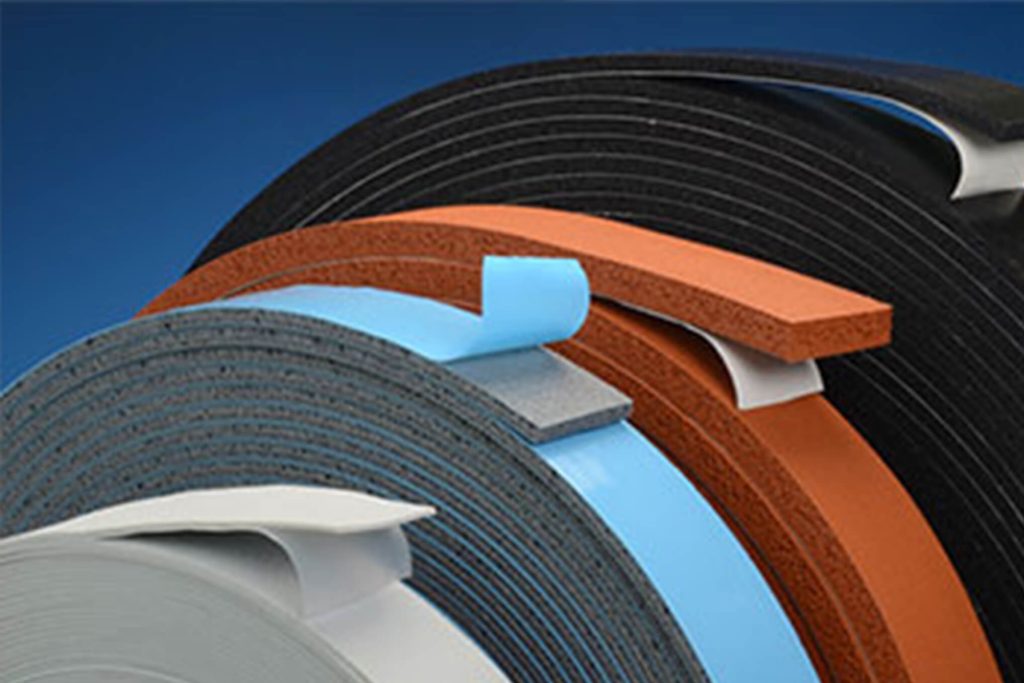
After vulcanisation the general appearance of expanded silicone is a fine non-interconnecting cell structure encapsulated by a soft smooth outer skin. Density of structure is varied to suit the required application. Skin tear resistance varies with density. Due to the severe blowing action during vulcanisation there can be an element of curve along the length and cross sectional surface of the extrusion and is particularly evident on thin wide strip. Every effort is made to minimise this effect.
Chemical Resistance
Generally, silicone is resistant to moderate or oxidizing chemicals, but is attacked by many solvents, oils and concentrated acids when in direct contact.
Temperature Limitations
Samco expanded silicone offers designers a versatile product capable of withstanding temperatures from -60°C up to +200°C continuous use. Exposure at elevated temperatures will have a limiting effect on the life of this material.
Compression Recovery
We do not generally recommend a compression loading greater than 25% when used in working temperatures between 100°C to 200°C. Structure collapse will occur on loading above 25% and an increase in compression set is more evident on thinner sections.
General Properties
- Resistance to ultra-violet light, corona, arcing and ozone is good.
- With a low degree of moisture absorption the mechanical properties show little change, even after long periods of immersion. However, superheated water will cause the silicone to break down after continuous immersion.
- Expanded silicone possesses valuable non-stick properties.
- Oxidation, which quickly destroys organic elastomers is virtually non existent with silicone rubber.
- Silicone rubber is generally resistant to moisture, including exposure to free steam. However, as steam pressure increases, its effect on the material’s structure becomes more pronounced. Expanded silicone is therefore not recommended for long-term use in applications where steam pressure exceeds 50 psi.
- Design Aid +
Our advanced in-house manufacturing methods enable the creation of fully custom silicone hose designs, including complex one-piece assemblies that minimise joint failure and leak risk, and improve overall flow performance. Our engineering team can integrate inserts, branches, and specialist features directly into the hose structure, ensuring a precise, durable solution tailored to each application.
Fill in form below to receive our comprehensive Design Aid+ Document.